
How to Build an Effective Cybersecurity Risk Register
Cybersecurity risks are becoming a growing concern for businesses of every size. From phishing attacks and ransomware to cloud misconfigurations, unauthorized access, and third-party vulnerabilities, organizations face a wide range of digital threats every day.
But identifying cybersecurity risks is only the beginning.
The real challenge is understanding which risks require immediate attention, who is responsible for managing them, what controls are already in place, and what actions should be taken next.
This is where a cybersecurity risk register becomes an important part of effective cybersecurity risk management.
A well-structured risk register helps organizations identify, assess, prioritize, treat, and monitor cybersecurity risks in a systematic way. Instead of managing security concerns through scattered spreadsheets, emails, or assumptions, businesses can maintain a clear and centralized view of their cybersecurity risks.
What Is a Cybersecurity Risk Register?
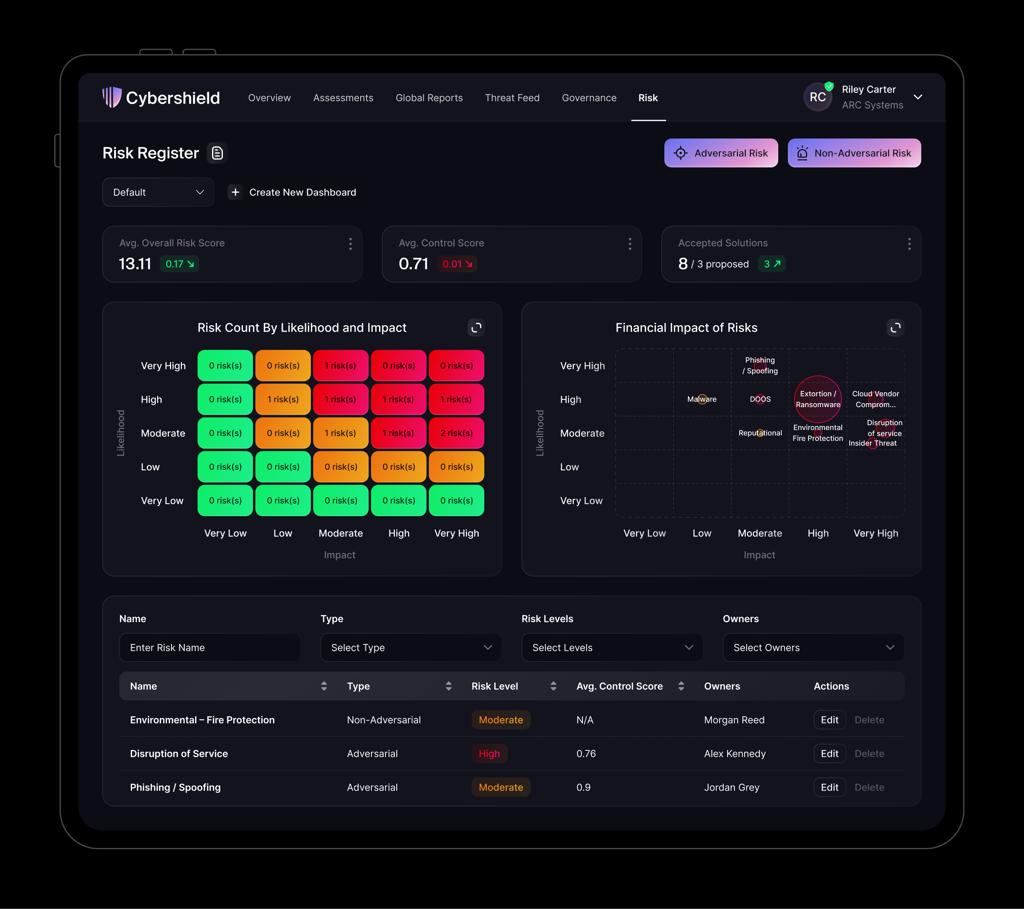
A cybersecurity risk register is a centralized record of the cybersecurity risks identified within an organization.
It provides a structured way to document important information about each risk, including:
Risk description
Affected asset or business process
Threat
Vulnerability
Likelihood
Potential impact
Existing security controls
Risk treatment
Risk owner
Residual risk
Current status
Review date
Instead of simply saying, “Our business has a cybersecurity risk,” a risk register helps answer more important questions:
What exactly is the risk?
How serious could it be?
What is currently protecting the business?
Who is responsible for managing it?
What action needs to be taken?
This makes cybersecurity risk management more organized, measurable, and actionable.
Why Does Your Business Need a Cybersecurity Risk Register?
Cybersecurity teams can identify several risks at the same time. However, not every risk has the same level of urgency or business impact.
For example, an organization may discover outdated software, weak employee passwords, cloud security gaps, insufficient backups, or third-party security concerns.
Without a structured approach, it can become difficult to determine which risks should be addressed first.
A cybersecurity risk register provides visibility and accountability while helping organizations make better-informed security decisions.
1. Improve Risk Visibility
A centralized risk register gives management and security teams a clearer picture of the organization's cybersecurity exposure.
Instead of keeping information across multiple documents or departments, important risks can be documented and monitored in one structured system.
2. Establish Clear Ownership
Every significant risk should have someone responsible for monitoring and managing it.
Assigning a risk owner helps ensure that cybersecurity issues do not remain unresolved simply because responsibility is unclear.
3. Support Better Decision-Making
Not every cybersecurity risk requires the same response.
By assessing likelihood, impact, existing controls, and business consequences, organizations can determine where their security efforts and resources should be focused.
4. Connect Cybersecurity With Business Objectives
Cybersecurity is not only an IT concern.
A security incident can affect business operations, customers, revenue, compliance, and reputation.
For example:
Cybersecurity Incident → System Disruption → Operational Delays → Customer Impact → Financial and Reputation Impact
A risk register helps organizations understand these connections and communicate cybersecurity risks in business terms.
How to Build an Effective Cybersecurity Risk Register
Creating a risk register does not mean building a complicated document with hundreds of fields.
The goal is to create a practical system that your organization can regularly maintain, review, and use for decision-making.
Step 1: Define the Scope
Before identifying risks, determine what your cybersecurity risk assessment will cover.
Depending on your organization, the scope may include:
Corporate networks
Cloud environments
Business applications
Customer databases
Employee devices
Critical business processes
Third-party vendors
Sensitive information
A clearly defined scope helps prevent important systems and processes from being overlooked.
Step 2: Identify Critical Assets
You cannot effectively manage cybersecurity risks without understanding what needs to be protected.
Identify important assets such as business data, applications, servers, cloud services, employee devices, networks, and critical business processes.
Different businesses will have different priorities.
For example, a healthcare organization may consider patient information and appointment systems highly important. An e-commerce business may prioritize customer data, payment systems, and its online platform.
The level of risk depends heavily on what is valuable to the business.
Step 3: Identify Threats and Vulnerabilities
Next, identify what could go wrong and why.
For example:
Threat: Phishing attack
Vulnerability: Employees lack sufficient security awareness.
Potential Impact: Unauthorized access to corporate accounts.
Another example could be:
Threat: Ransomware
Vulnerability: Inadequate or untested backups.
Potential Impact: Business disruption and potential data loss.
A useful risk description should connect the threat, vulnerability, and potential business impact.
This provides much more value than simply writing “cyberattack” or “security issue.”
Step 4: Assess Likelihood and Impact
After identifying a risk, assess how likely it is to occur and how serious the consequences could be.
A simple approach is:
Risk Score = Likelihood × Impact
For example:
Low likelihood + Low impact = Lower risk
Medium likelihood + Medium impact = Moderate risk
High likelihood + High impact = Significant risk
Organizations should define clear scoring criteria so that different risks can be assessed consistently.
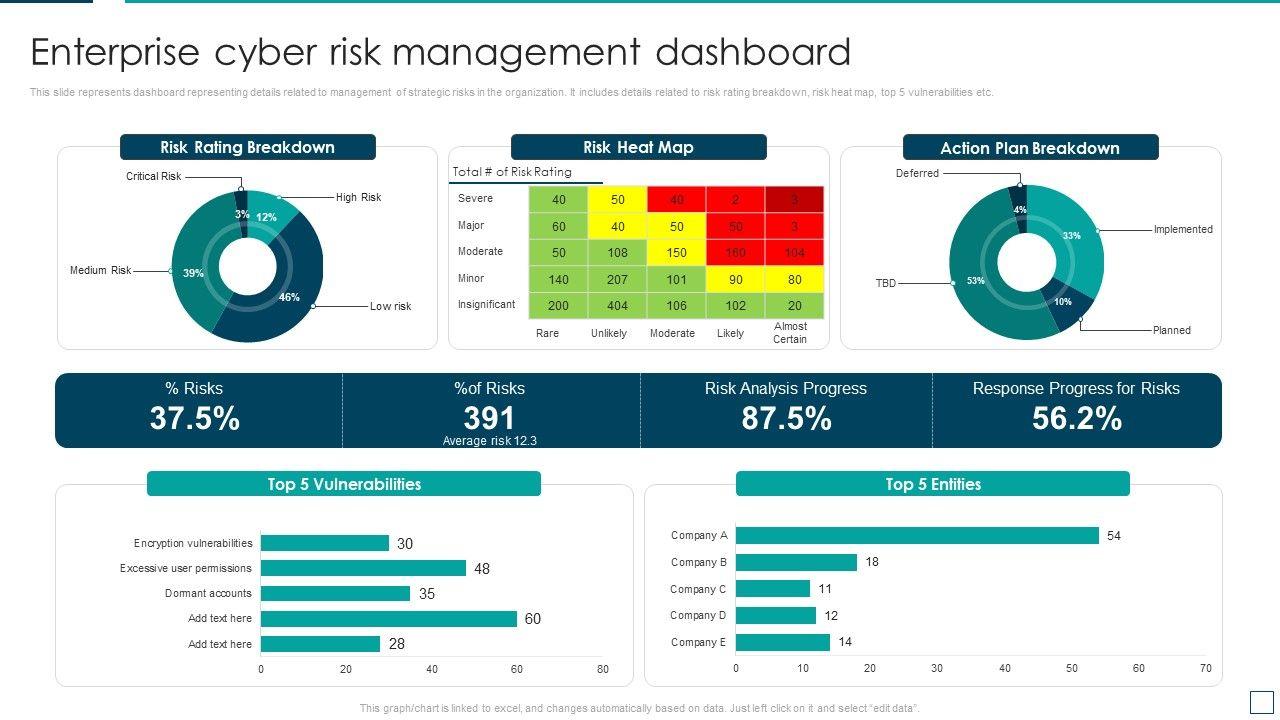
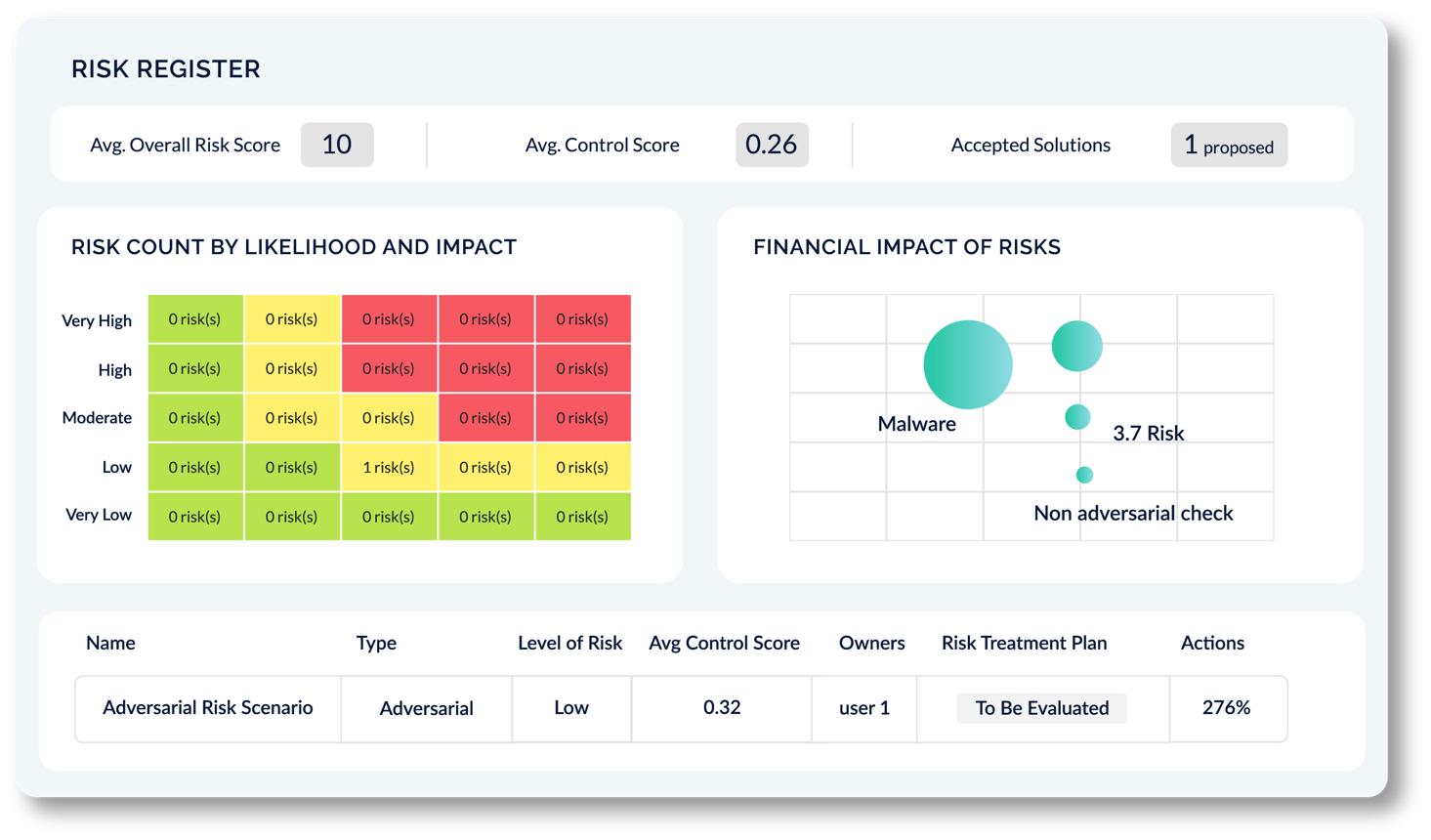
A risk matrix can also help management quickly understand which risks require greater attention.
Step 5: Document Existing Security Controls
Before deciding how to treat a risk, determine what security controls are already in place.
These may include:
Multi-factor authentication
Encryption
Firewalls
Endpoint protection
Access controls
Security monitoring
Employee awareness training
Vulnerability management
Backup systems
Incident response procedures
Understanding existing controls helps organizations determine how much risk remains after current protections are considered.
This remaining exposure is commonly referred to as residual risk.
Step 6: Decide How to Treat the Risk
Once a risk has been assessed, determine what action should be taken.
Common risk treatment approaches include:
Reduce: Implement additional controls to reduce the likelihood or impact of the risk.
Avoid: Change or discontinue an activity when the associated risk is not acceptable.
Transfer: Shift certain financial or contractual consequences through mechanisms such as insurance or contractual arrangements.
Accept: Formally acknowledge the risk when it falls within the organization's defined risk tolerance.
The important point is that the decision should be documented rather than simply leaving the risk unresolved.
Step 7: Assign a Risk Owner
A risk register should not become a document that everyone can see but nobody manages.
Each important risk should have a clearly identified owner.
For example:
Risk: Phishing
Owner: IT/Security Team
Action: Employee awareness training and email security controls
Another example:
Risk: Cloud Misconfiguration
Owner: Cloud Administrator
Action: Configuration review and security hardening
Clear ownership creates accountability and makes follow-up easier.
Step 8: Create a Risk Treatment Plan
Identifying a risk is not enough.
The risk register should explain what will be done about it.
A treatment plan can include:
Recommended control
Required action
Responsible owner
Target completion date
Current status
Expected residual risk
Review date
For example:
Risk: Unauthorized access to sensitive customer data
Treatment: Strengthen identity and access management
Owner: IT Security Lead
Action: Implement MFA and conduct regular access reviews
Status: In Progress
This transforms the risk register from a simple list of problems into an action-oriented cybersecurity management tool.
Step 9: Monitor and Review the Register
Cybersecurity risks are constantly changing.
New technologies, employees, vendors, applications, vulnerabilities, and business processes can introduce new risks.
For this reason, a cybersecurity risk register should be regularly reviewed and updated.
Consider reviewing the register when:
A major system changes
A new vendor is introduced
A security incident occurs
A major vulnerability is discovered
Business operations change
New regulatory requirements apply
A security control is implemented or removed
Regular monitoring helps ensure that the risk register continues to reflect the organization's current cybersecurity environment.
What Should a Cybersecurity Risk Register Include?
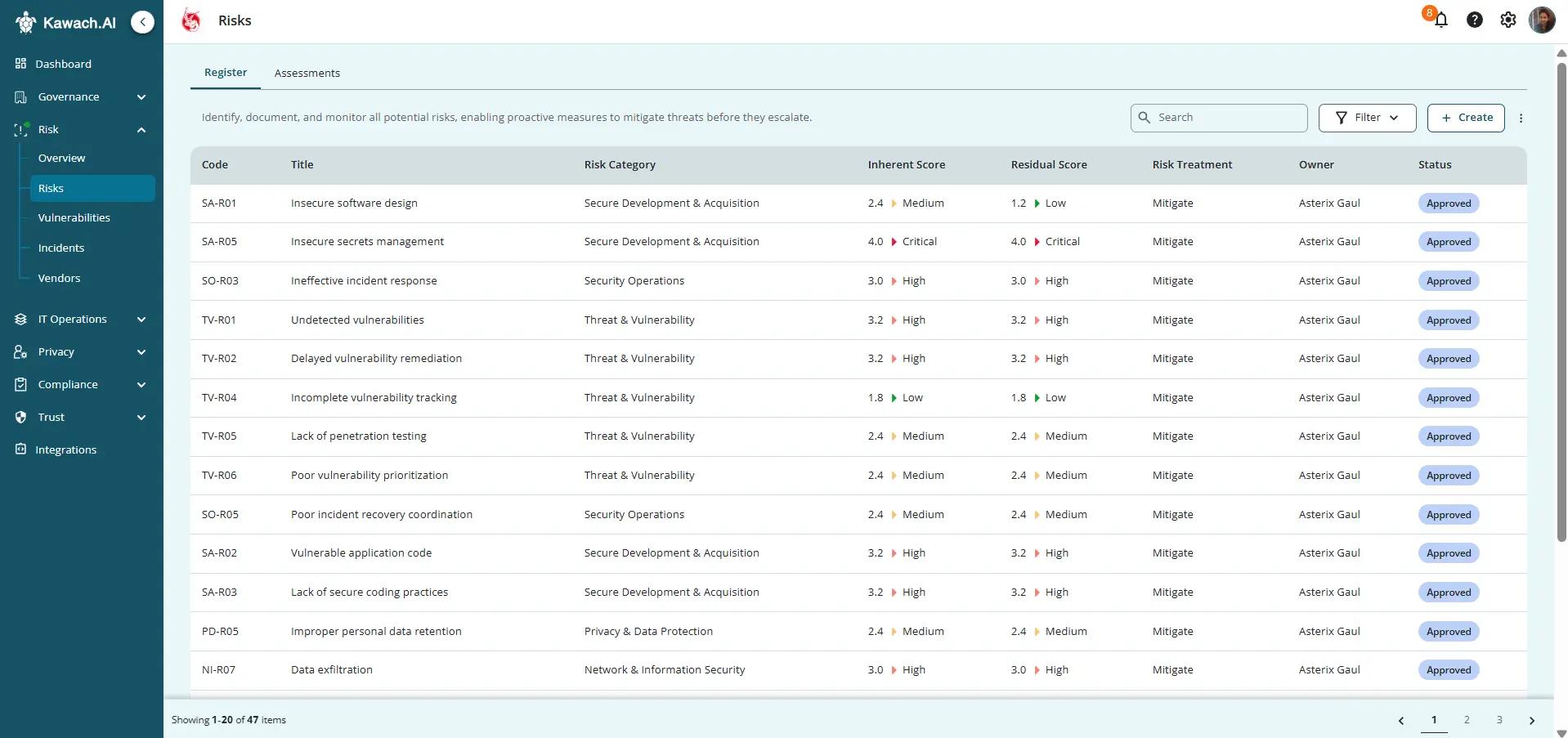
A practical cybersecurity risk register may include the following fields:
Risk ID: Unique identification for the risk
Risk Description: Clear explanation of the risk
Asset or Process: System, asset, or business process affected
Threat: Potential threat involved
Vulnerability: Weakness that could be exploited
Likelihood: Estimated probability
Impact: Potential business consequence
Inherent Risk: Risk before additional treatment
Existing Controls: Current security protections
Treatment Plan: Actions required to address the risk
Risk Owner: Person responsible for managing the risk
Residual Risk: Remaining exposure after controls
Status: Current progress
Review Date: Date for the next assessment
The exact structure can vary depending on the organization's size, industry, risk methodology, and compliance requirements.
Common Cybersecurity Risk Register Mistakes
Even organizations that maintain risk registers can make them ineffective.
Treating the Register as a One-Time Document
Cybersecurity changes continuously. A register that is never updated can quickly become outdated.
Listing Risks Without Owners
If nobody is accountable for a risk, it may remain unresolved.
Using Vague Risk Descriptions
“Cyberattack risk” does not provide enough information.
A stronger description explains what could happen, why it could happen, and what the potential consequence could be.
Focusing Only on Technical Risks
Cybersecurity risks can affect customers, operations, finances, compliance, and reputation — not just IT systems.
Tracking Risks Without Tracking Actions
A risk register should support decisions and actions rather than simply collecting problems.
From Risk Register to Stronger Cybersecurity
A cybersecurity risk register is more than a spreadsheet.
When properly maintained, it can become an important part of an organization's broader cybersecurity and GRC strategy.
It can help organizations follow a continuous cycle:
Identify → Assess → Prioritize → Treat → Monitor → Improve
The objective is not simply to create a list of every possible cybersecurity problem.
The goal is to understand the organization's exposure, establish accountability, make informed decisions, and continuously improve security controls.
A structured cybersecurity risk register can also help business and technology teams communicate more effectively about cybersecurity priorities.
Build a Cybersecurity Risk Strategy That Supports Your Business
Cybersecurity risk management should not begin after an incident.
It should begin with understanding what matters to your business, what could put it at risk, and what actions can reduce that exposure.
A well-structured cybersecurity risk register provides a practical foundation for doing exactly that.
At Arav Innovations, we help businesses approach technology, cybersecurity, and GRC with a practical, business-focused strategy. From identifying cybersecurity risks to strengthening controls and improving risk management processes, our goal is to help organizations build a more structured approach to managing digital risk.
Is your business aware of its highest cybersecurity risks?
Don't wait for a security incident to reveal the gaps.
Talk to Arav Innovations today and take the first step toward a stronger cybersecurity risk management strategy.
DM us “RISK” to start the conversation.